

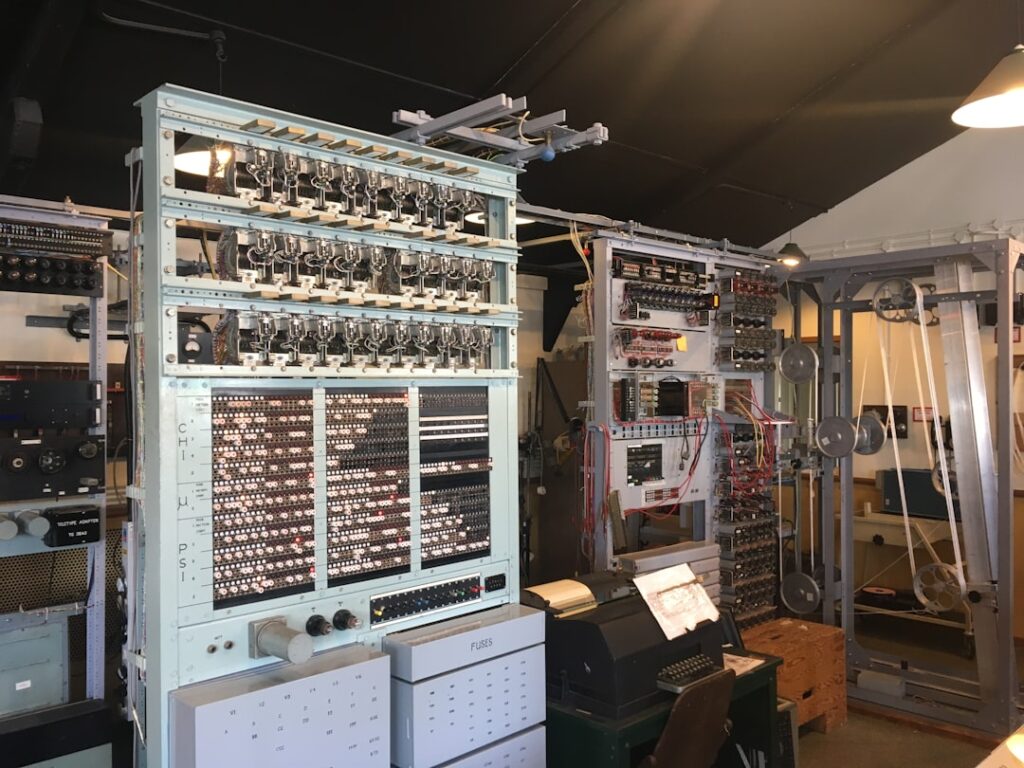
The global supply chain, a complex web of interconnected processes, faces increasing disruption from pandemics, geopolitical instability, and extreme weather events. Traditional optimization methods, largely reliant on classical computing, struggle to manage the immense scale and dynamic nature of modern supply chains. Quantum computing presents a paradigm shift, offering computational capabilities that could fundamentally redefine how goods are produced, transported, and delivered worldwide. This article explores the potential impact of quantum computing on global supply chains, outlining specific applications and challenges.
Achieving complete visibility across a global supply chain is a persistent challenge. Data silos, diverse IT systems, and the sheer volume of information often obscure the true state of operations. Quantum computing offers tools to process and analyze this complex data more effectively, providing a clearer picture of events.
Quantum Machine Learning for Predictive Analytics
Classical machine learning algorithms are already employed to forecast demand, predict disruptions, and optimize inventory levels. However, their ability to model highly complex, non-linear relationships with vast datasets is limited. Quantum machine learning (QML) algorithms, leveraging principles of superposition and entanglement, could process significantly larger and more intricate datasets.
- Improved Demand Forecasting: QML models could incorporate a broader range of variables, including macroeconomic indicators, social media trends, and hyper-local weather patterns, to generate more accurate demand predictions. This allows for proactive adjustments rather than reactive responses. Consider the ripple effect of a sudden shift in consumer preference; QML might detect and quantify this shift earlier and more precisely than classical methods.
- Disruption Prediction and Mitigation: By analyzing historical data on disruptions – natural disasters, port congestion, labor disputes – alongside real-time sensor data, QML could identify early warning signs of potential disruptions. For example, a quantum model might correlate minor shipping delays in one region with an increased probability of broader port closures elsewhere, enabling companies to reroute shipments before congestion becomes critical. This is akin to observing faint tremors before an earthquake; quantum computing might provide a more sensitive seismograph.
Real-time Data Integration and Analysis
Current supply chains often suffer from fragmented data. Information from suppliers, logistics providers, manufacturers, and retailers resides in disparate systems. Quantum platforms could facilitate the integration and analysis of this diverse data in near real-time.
- End-to-End Tracking: Imagine a quantum-secured ledger system that records every movement and transaction of a product from its raw material origin to final delivery. This would create an immutable and transparent record, enhancing traceability and reducing instances of fraud or misplacement. This is not merely tracking a single parcel, but tracking every component within that parcel, and every process it undergoes.
- Sensor Network Optimization: The Internet of Things (IoT) generates vast amounts of sensor data from warehouses, transportation vehicles, and production lines. Quantum algorithms could optimize the placement and data collection from these sensors, identifying critical points for monitoring and detecting anomalies that indicate equipment failure or deviations from planned routes. This provides a digital nervous system for the supply chain, with quantum computing acting as the intelligent processor of its signals.
In the context of exploring the transformative impact of quantum computing on global supply chains, a related article that delves into the nuances of leadership in this evolving landscape is available at Leadership Coaching: Navigating Change in a Quantum World. This piece highlights how effective leadership strategies are essential for organizations to adapt and thrive amidst the rapid technological advancements brought about by quantum computing, ultimately reshaping operational frameworks and decision-making processes in supply chain management.
Optimizing Logistics and Transportation
Logistics and transportation represent significant cost centers and points of vulnerability within supply chains. Route optimization, fleet management, and warehouse layout are computationally intensive problems that can benefit from quantum advantage.
Quantum Algorithms for Route Optimization
The Traveling Salesperson Problem (TSP), a classic optimization challenge, scales exponentially with the number of locations. Quantum annealing and quantum approximate optimization algorithms (QAOA) offer potential solutions for complex routing problems.
- Multi-objective Routing: Supply chains rarely optimize for a single objective. Factors such as cost, delivery time, carbon emissions, and resource utilization must be balanced. Quantum algorithms could explore vast solution spaces to identify optimal multi-objective routes for fleets of vehicles, ships, and aircraft. This moves beyond finding the shortest path to finding the most efficient path across multiple dimensions, much like finding the optimal trajectory for a projectile considering not just distance, but also fuel consumption and environmental impact.
- Dynamic Re-routing: Real-time events, such as traffic accidents, weather detours, or unexpected cargo availability, necessitate immediate rerouting. Quantum algorithms could rapidly recalculate optimal routes in response to these dynamic changes, minimizing delays and mitigating associated costs. This is like a self-correcting navigational system for an entire fleet, constantly adapting to a changing landscape.
Warehouse and Inventory Management
Efficient warehouse operations are crucial for timely order fulfillment. Quantum computing could revolutionize inventory placement, picking strategies, and warehouse design.
- Optimal Stock Placement: Determining the ideal location for each product within a large warehouse to minimize retrieval times is a complex optimization problem. Quantum algorithms could analyze product Popularity, co-occurrence with other items, and ergonomic factors to suggest optimal placement strategies. This means fewer steps for workers and faster order processing.
- Inventory Level Optimization: Balancing carrying costs with the risk of stockouts is a perpetual challenge. Quantum models could more precisely predict demand fluctuations and lead times, recommending optimal inventory levels across multiple distribution centers, thereby reducing waste and improving service levels. This allows for a finer calibration of stock levels, like tuning a precision instrument.
Enhancing Resilience and Risk Management

Supply chains are increasingly exposed to a range of risks, from natural disasters to cyber threats. Quantum computing could bolster resilience by improving risk assessment, enabling more robust contingency planning, and securing critical infrastructure.
Quantum Risk Assessment and Scenario Planning
Traditional risk models often struggle to account for complex interdependencies and cascading failures within a global supply chain. Quantum algorithms can model these intricate relationships.
- Identifying Weak Points: Quantum graph analysis could identify critical nodes and vulnerable links within the supply chain network that, if compromised, would have the most severe cascading effects. This helps businesses prioritize investments in resilience. Imagine identifying the single most fragile thread in a vast tapestry; quantum computing could highlight it.
- Stress Testing Scenarios: Quantum simulation could run millions of hypothetical disruption scenarios – a port closure in Asia, a manufacturing halt in Europe, a cyberattack on logistics systems – to evaluate the supply chain’s robustness and identify optimal mitigation strategies. This allows for proactive planning rather than reactive crisis management. This is about running complex simulations of potential disasters before they occur, much like training for a real-world emergency using highly realistic scenarios.
Quantum Cryptography for Supply Chain Security
The increasing digitalization of supply chains creates new vulnerabilities to cyberattacks. Quantum cryptography offers a robust defense against current and future threats.
- Secure Data Transmission: Quantum Key Distribution (QKD) can establish theoretically unbreakable encryption keys for transmitting sensitive supply chain data, such as proprietary designs, financial transactions, and customer information. This ensures the integrity and confidentiality of vital information flowing across the network. This provides an almost unbreakable padlock for your digital communications.
- Tamper-Proof Tracking: Combining QKD with blockchain technology could create an exceptionally secure and tamper-proof record of product movements and transactions. This enhances trust and prevents illicit alterations to supply chain data, beneficial for tracking high-value goods or ensuring the authenticity of products. This turns the digital ledger into an unalterable stone tablet.
Redefining Supply Chain Design and Network Optimization

Beyond incremental improvements, quantum computing has the potential to fundamentally redesign supply chain networks, leading to more efficient and adaptable structures.
Quantum-Enabled Network Design
Designing an optimal supply chain network involves decisions about plant locations, warehouse placements, and transportation hubs. This is a complex, multi-variable optimization problem.
- Global Network Reconfiguration: Quantum algorithms could analyze vast geographical data, logistical constraints, and market demands to determine the optimal global footprint for manufacturing, distribution, and assembly facilities. This goes beyond local optimization to identify globally efficient structures. Imagine a quantum architect designing a sprawling metropolis, considering every aspect for optimal flow and functionality.
- Resilient Network Architectures: Quantum optimization can design networks that are inherently resilient, featuring redundancy and alternative pathways to withstand localized disruptions without collapsing. This builds robustness into the very structure of the supply chain, rather than patching vulnerabilities after the fact. This is about building a bridge with multiple redundant supports, not just a single point of failure.
Smart Contract Optimization
Blockchain-based smart contracts are gaining traction in supply chains for automating agreements and transactions. Quantum computing could enhance their efficiency and complexity.
- Complex Agreement Execution: Quantum algorithms could execute highly complex smart contracts involving numerous interdependent conditions, multiple parties, and dynamic pricing models more efficiently than classical systems. This allows for more nuanced and adaptable contractual agreements.
- Supply Chain Trust Management: By integrating quantum-secured data with smart contracts, the transparency and trustworthiness of supply chain transactions can be significantly enhanced, reducing disputes and fostering greater collaboration among partners. This elevates the smart contract from a simple automated agreement to a highly intelligent and trustworthy digital arbiter.
In exploring the transformative impact of quantum computing on global supply chains, it is essential to consider how these advancements can enhance operational efficiency and decision-making processes. A related article that delves deeper into the implications of emerging technologies on logistics and supply chain management can be found here. This resource provides valuable insights into the intersection of technology and supply chain dynamics, highlighting the potential for quantum computing to revolutionize traditional practices.
Addressing Challenges and Future Outlook
| Metric | Current State | Impact of Quantum Computing | Projected Improvement | Timeframe |
|---|---|---|---|---|
| Supply Chain Optimization Speed | Hours to days | Near-instantaneous complex problem solving | Reduction by 90% | 5-10 years |
| Inventory Management Accuracy | 85-90% | Enhanced predictive analytics with quantum algorithms | Improvement to 98-99% | 3-7 years |
| Logistics Route Optimization | Suboptimal due to computational limits | Optimal route calculations for complex networks | Up to 30% cost and time savings | 5-8 years |
| Risk Management and Disruption Prediction | Moderate predictive capabilities | Advanced scenario simulations and risk assessments | Improved prediction accuracy by 40% | 4-6 years |
| Data Security in Supply Chains | Standard encryption methods | Quantum-resistant cryptography implementation | Near-impervious data protection | 6-10 years |
While the potential of quantum computing for supply chains is substantial, its widespread adoption faces significant hurdles. These include technological limitations, economic considerations, and the need for specialized expertise. However, ongoing research and development suggest a path forward.
Current Limitations and Development
Quantum computing is still in its nascent stages. Current quantum computers are noisy, susceptible to errors, and have limited qubit counts.
- Hardware Maturity: The development of fault-tolerant quantum computers is a critical prerequisite. Until then, hybrid quantum-classical algorithms, leveraging the strengths of both paradigms, will likely dominate.
- Algorithm Development: Many quantum algorithms tailored for supply chain problems are still under development or are theoretical constructs that require practical implementation. The transition from theoretical promise to practical application necessitates continued research.
Economic and Workforce Implications
The initial investment in quantum computing infrastructure and expertise will be substantial. Companies must weigh these costs against the potential benefits.
- Cost of Adoption: Access to quantum computing resources, whether through cloud services or on-premise solutions, currently carries a high cost. As the technology matures, costs are expected to decrease, making it accessible to a broader range of businesses.
- Talent Gap: A significant shortage of skilled quantum engineers, physicists, and data scientists exists. Universities and industry will need to collaborate to train the workforce necessary to harness these new capabilities. This involves cultivating a new generation of digital architects and engineers for the quantum age.
Ethical Considerations
As quantum computing becomes more powerful, ethical implications related to data privacy, algorithmic bias, and its potential impact on employment must be addressed.
- Data Privacy: The ability of quantum computers to process vast amounts of sensitive supply chain data raises concerns about privacy and the potential for misuse. Robust frameworks for data governance and security will be essential.
- Algorithmic Bias: If not carefully designed, quantum algorithms can perpetuate or even amplify existing biases embedded in training data. Ensuring fairness and transparency in QML models is paramount.
The journey towards a quantum-powered supply chain is underway. Quantum computing is not a panacea for all supply chain woes, but rather a powerful new set of tools. Its integration will be gradual, likely starting with specific, high-value applications where classical methods falter. As quantum technology matures, it promises to usher in an era of unprecedented supply chain efficiency, resilience, and adaptability, fundamentally reshaping the flow of goods and information across the globe.