

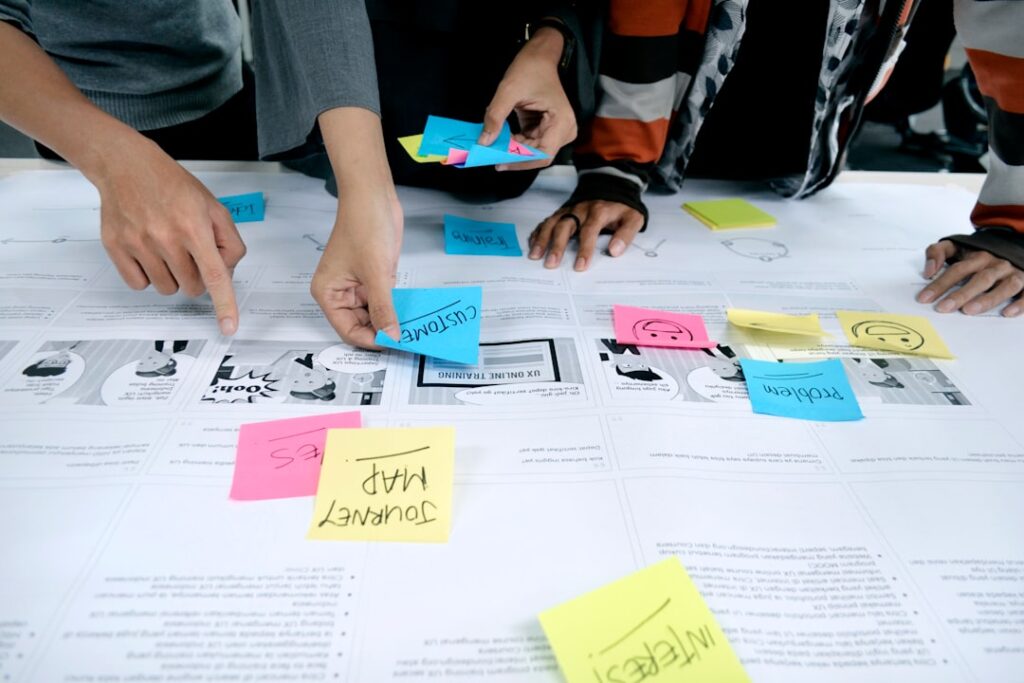
The Creative Discovery Studio, often referred to as CDS, operates as a structured framework for approaching social impact projects through the lens of design thinking. It is not merely a concept but a practical methodology that guides individuals and teams through a process of empathetic understanding, creative ideation, and iterative prototyping to address complex societal challenges. At its core, CDS recognizes that the most effective solutions are born not from top-down pronouncements, but from a deep and nuanced understanding of the people and communities they aim to serve. Think of it as a cartographer meticulously mapping uncharted territory, ensuring every contour and elevation is accounted for before drafting the final map.
Empathy as the Bedrock
Empathy forms the foundational principle of CDS. The process actively encourages participants to step outside their own perspectives and immerse themselves in the lived experiences of the target beneficiaries. This is not a passive exercise of observation; rather, it involves active listening, engaging in conversations, and seeking to understand the underlying needs, desires, and frustrations that drive human behavior. Without this deep well of empathy, any proposed solution risks being like a ship built without a compass – it may appear functional, but it will likely drift aimlessly.
User Research Methodologies
To cultivate empathy, CDS employs a range of user research methodologies. These tools are designed to elicit rich qualitative data and provide genuine insights.
Interviews and Focus Groups
Direct engagement through interviews and focus groups allows for probing questions and follow-up discussions that can uncover subtle nuances in user perspectives. These conversations are structured to encourage storytelling and reveal emotional underpinnings of needs.
Observation and Shadowing
Observing participants in their natural environments provides invaluable, unprompted information. Shadowing individuals as they navigate their daily routines or engage with specific services reveals unspoken challenges and workarounds that may not surface in direct questioning.
Journey Mapping
Mapping the user’s journey—from initial awareness of a problem to their interaction with a potential solution and its aftermath—helps to visualize their experience in its entirety. This technique highlights pain points and opportunities for intervention.
Iterative Prototyping and Testing
Once a foundational understanding is established, CDS moves into the realm of creation and refinement. The iterative nature of prototyping is crucial, recognizing that the first idea is rarely the best idea. Instead, it’s a stepping stone. This phase is akin to a sculptor constantly chipping away at a block of marble, revealing the form within through continuous refinement.
Low-Fidelity to High-Fidelity Prototyping
The studio emphasizes a progression from low-fidelity prototypes—quick sketches, storyboards, or simple role-playing scenarios—to more robust, high-fidelity prototypes that closely resemble the final intended solution. This gradual scaling allows for rapid experimentation and feedback without significant investment of resources.
Concept Testing
Early-stage concepts are tested with target users to gauge initial reactions and identify fundamental flaws. This feedback loop is essential for course correction before investing heavily in development.
Usability Testing
As prototypes become more refined, usability testing focuses on how easily and effectively users can interact with the proposed solution. This unveils practical challenges in navigation, functionality, and overall user experience.
Collaborative Ideation and Co-Creation
CDS thrives on the collective intelligence of its participants. The process encourages diverse perspectives and fosters an environment where ideas can be built upon and refined collaboratively. This is not a solo expedition; it’s a shared voyage where each crew member contributes to charting the course.
Brainstorming and Idea Generation Techniques
A variety of techniques are employed to stimulate creative thinking and generate a wide spectrum of potential solutions.
Standard Brainstorming
This classic method encourages free-flowing idea generation, with an emphasis on quantity over quality in the initial stages.
Brainwriting
A more structured approach where participants write down their ideas before sharing, which can be beneficial for introverted individuals or to prevent groupthink.
SCAMPER Method
A mnemonic for Substitute, Combine, Adapt, Modify, Put to another use, Eliminate, and Reverse, SCAMPER provides prompts to spark new thinking about existing ideas or concepts.
Cross-Disciplinary Collaboration
The studio actively seeks to bring together individuals from varied backgrounds—designers, social workers, technologists, community leaders, and those with lived experience—to foster a rich exchange of knowledge and perspectives. This cross-pollination of ideas is vital for generating innovative and comprehensive solutions.
In exploring the intersection of design thinking and social impact, a related article that delves into the nuances of innovation and change management can be found at this link. This resource complements the insights provided in The Creative Discovery Studio: Design Thinking for Social Impact Projects by offering a broader perspective on how innovative strategies can effectively drive change within communities. Both pieces emphasize the importance of a human-centered approach in addressing complex social challenges.
Application in Social Impact
The Creative Discovery Studio is particularly well-suited for addressing the multifaceted and often deeply entrenched challenges found within the social impact sector. Its structured approach provides a tangible pathway for translating good intentions into effective, sustainable interventions. Imagine it as assembling a complex puzzle; CDS provides the framework and the pieces, guiding the process of fitting them together to reveal the complete picture.
Addressing Complex Social Issues
CDS is designed to tackle problems that lack simple answers. Issues such as poverty, lack of access to education, healthcare disparities, and environmental degradation often involve a web of interconnected factors that require a holistic and human-centered approach. The methodology’s emphasis on understanding the root causes, rather than just treating the symptoms, makes it a powerful tool for social change.
Systemic Problem Definition
The initial stages of CDS focus on deeply understanding the systems within which a social problem exists. This involves mapping stakeholders, identifying feedback loops, and understanding the dynamics that perpetuate the issue.
Stakeholder Analysis
Identifying and understanding the motivations, needs, and influence of all parties involved in a social issue is crucial for developing effective solutions.
Root Cause Analysis
Moving beyond superficial symptoms, CDS aims to unearth the fundamental reasons behind a social problem through techniques like the “Five Whys.”
Designing for Sustainability and Scalability
While immediate impact is important, CDS also emphasizes the creation of solutions that are sustainable in the long term and have the potential to be scaled to reach a wider population. This requires careful consideration of resource allocation, community engagement, and the adaptability of the solution to different contexts.
Business Model Innovation for Social Enterprises
For social enterprises, CDS can help develop innovative business models that ensure financial viability while maintaining a strong social mission. This involves creating value propositions that resonate with both beneficiaries and funders.
Resource Mobilization Strategies
Exploring diverse funding streams and leveraging partnerships are key to securing the resources needed for sustained impact.
Policy and Advocacy Integration
Understanding how proposed solutions can inform or influence policy decisions is also an integral part of the CDS framework for achieving broader societal change.
Key Stages of the Process

The Creative Discovery Studio generally follows a cyclical and fluid process, rather than a rigid linear progression. While there are distinct phases, there is often movement back and forth between them as new insights emerge. Think of it as a river; it flows in a general direction, but eddies and currents can cause it to loop back or shift course.
Discover Phase: Understanding the Landscape
This initial phase is dedicated to gaining a profound understanding of the problem space and the people affected by it. It is about immersing oneself in the context and building a robust foundation of knowledge.
Problem Framing
Clearly articulating the problem to be addressed, often moving from a broad statement to a more specific and actionable challenge.
Needs Assessment
Identifying the unmet needs and aspirations of the target population through rigorous research.
Define Phase: Synthesizing Insights
In this phase, the raw data and observations from the Discover phase are analyzed and synthesized to pinpoint the core issues and opportunities.
Persona Development
Creating detailed profiles of typical users to represent the diverse needs and characteristics of the target audience.
“How Might We” Statements
Transforming observed needs into engaging questions that frame opportunities for innovation. These statements act as seeds for ideation.
Develop Phase: Generating Solutions
This is the ideation phase, where a wide range of potential solutions are generated and explored.
Brainstorming Sessions
Facilitated sessions to encourage creative thinking and the generation of numerous ideas.
Idea Selection and Prioritization
Establishing criteria to evaluate and select the most promising ideas for further development.
Deliver Phase: Prototyping and Testing
Here, selected ideas are translated into tangible prototypes and put to the test with real users.
Prototype Creation
Developing functional representations of the proposed solutions, ranging from low-fidelity to high-fidelity.
User Feedback Collection
Systematically gathering feedback from users on the prototypes to identify areas for improvement.
Tools and Techniques Employed
The Creative Discovery Studio draws upon a rich toolkit of methodologies and creative techniques to facilitate its process. These are not rigid dictates but rather adaptable aids to guide thinking and action. Consider them the artisan’s instruments, chosen and wielded to shape the raw material into something meaningful.
Visual Thinking and Mapping Tools
Visual aids are instrumental in making complex information accessible and fostering understanding.
Whiteboarding and Mind Mapping
These tools allow for the freeform capture and organization of ideas, encouraging collaborative brainstorming and the identification of connections.
Storyboarding
Creating a visual narrative of a user’s experience or interaction with a proposed solution, helping to anticipate challenges and opportunities.
Facilitation and Collaboration Techniques
Effective facilitation is key to unlocking group potential and ensuring productive dialogue.
Design Sprints
Intensive, short-term workshops designed to rapidly prototype and test an idea, compressing weeks of work into days.
Gamification
Incorporating game-like elements into the process to increase engagement, motivation, and creative problem-solving.
Research and Analysis Methods
A solid understanding of the problem space is built on sound research and analytical approaches.
Data Visualization
Presenting complex data in an easily digestible visual format to reveal patterns and insights.
Qualitative Data Analysis Software
Tools that assist in organizing, coding, and analyzing qualitative research data to extract key themes and findings.
The Creative Discovery Studio: Design Thinking for Social Impact Projects offers innovative approaches to tackling societal challenges through creative problem-solving. For those interested in exploring similar themes, an insightful article can be found at this link, which delves into the intersection of design thinking and community engagement. This resource complements the ideas presented in the studio, providing further context and examples of how design thinking can be effectively applied to create meaningful social change.
Impact and Outcomes
| Metric | Value | Description |
|---|---|---|
| Course Duration | 6 weeks | Length of the design thinking program |
| Number of Modules | 5 | Core stages of the design thinking process covered |
| Average Project Team Size | 4-6 members | Typical group size for collaborative projects |
| Social Impact Focus Areas | Education, Environment, Health, Community Development | Key sectors targeted by projects |
| Participant Satisfaction Rate | 92% | Percentage of participants rating the course positively |
| Number of Projects Completed | 30+ | Total social impact projects developed through the studio |
| Tools and Methods Used | Empathy Mapping, Ideation, Prototyping, User Testing | Design thinking techniques applied in projects |
| Post-Course Engagement | 75% | Participants continuing social impact work after course completion |
The Creative Discovery Studio, when effectively implemented, can yield significant positive outcomes for social impact projects, leading to more relevant, effective, and sustainable interventions. Its influence extends beyond the immediate project to foster a culture of innovation and continuous improvement. The fruits of its labor are not just temporary fixes but catalysts for lasting positive change.
Increased Relevance and Effectiveness
By grounding solutions in the genuine needs and experiences of beneficiaries, CDS ensures that interventions are not only well-intentioned but also truly address the identified problems. This leads to a higher likelihood of success and meaningful impact.
User-Centered Design Benefits
Solutions developed through a user-centered approach are inherently more likely to be adopted and utilized by the target audience, leading to greater efficacy.
Measurable Social Return on Investment (SROI)
When projects are designed with a deep understanding of impact, they are better positioned to demonstrate a strong social return on investment.
Fostering Innovation and Adaptability
The iterative nature of CDS encourages a mindset of experimentation and continuous learning. This not only leads to better initial solutions but also equips organizations with the ability to adapt and evolve their approaches as circumstances change.
Building Organizational Capacity
Introducing CDS methodologies can build internal capacity within organizations to tackle future challenges with a more innovative and user-focused approach.
Resilience in Program Design
The emphasis on user feedback and iterative testing builds resilience into social programs, allowing them to withstand unforeseen challenges.
Empowering Communities and Stakeholders
CDS actively involves beneficiaries and other stakeholders in the design process, fostering a sense of ownership and empowerment. This collaboration ensures that solutions are co-created and therefore more likely to be embraced and sustained by the community.
Participatory Design Principles
Incorporating participatory design ensures that the voices of those most affected are central to the decision-making process.
Building Trust and Collaboration
The transparent and inclusive nature of CDS helps to build trust between organizations and the communities they serve, fostering stronger partnerships.
The Creative Discovery Studio: Design Thinking for Social Impact Projects emphasizes the importance of innovative approaches in addressing societal challenges. For those interested in exploring similar themes, a related article can provide further insights into the intersection of creativity and social change. You can read more about this topic in the article on design thinking for social impact, which delves into practical strategies and case studies that illustrate how design thinking can effectively drive positive change in communities.
Challenges and Considerations
While the Creative Discovery Studio offers a powerful framework for social impact, its implementation is not without its challenges. Recognizing these potential hurdles allows for proactive mitigation and a more successful application of the methodology. It’s like understanding the potential hazards of a journey before setting out, allowing for preparedness.
Resource Intensity and Time Commitments
Effective application of CDS, particularly the extensive user research and iterative prototyping, can be resource-intensive in terms of both time and personnel.
Budgetary Constraints
Securing adequate funding for in-depth research, prototyping materials, and skilled facilitation can be a significant obstacle for many organizations.
Staff Training and Development
Organizations may need to invest in training their staff in design thinking principles and facilitation techniques, which requires time and financial resources.
Navigating Complex Stakeholder Landscapes
Engaging with a diverse range of stakeholders, each with their own perspectives, priorities, and power dynamics, can be a delicate and challenging undertaking.
Managing Conflicting Interests
Resolving disagreements and finding common ground among stakeholders with potentially conflicting agendas requires skillful negotiation and facilitation.
Ensuring Equitable Representation
It can be challenging to ensure that all relevant voices, especially those on the margins, are adequately heard and considered in the design process.
Measuring Impact and Demonstrating Value
Quantifying the impact of design thinking initiatives, especially in the nuanced realm of social change, can be complex and require robust evaluation frameworks.
Defining Success Metrics
Establishing clear, measurable, achievable, relevant, and time-bound (SMART) metrics for design-led interventions can be difficult.
Communicating Value to Skeptics
Demonstrating the tangible benefits of a human-centered, iterative approach to stakeholders who may be accustomed to more traditional problem-solving methods requires clear articulation of outcomes.